
Director: Francis Lawrence
Cast: Joseph Zada, Jesse Plemons, Ralph Fiennes, Glenn Close, Ben Wang, Kieran Culkin, Elle Fanning, Mckenna Grace, Maya Hawke, Whitney Peak, Kelvin Harrison Jr.
Screenplay: Billy Ray, Michael Leslie
158 mins. Rated PG-13 for strong violence, bloody images, disturbing material, some smoking and teen drinking.
People tend to underestimate or forget the power of The Hunger Games franchise. The franchise has always performed, especially with budgets lower than many would suspect from the pedigree of the cast. While the main franchise peaked with Catching Fire (the best book and best film), Sunrise on the Reaping is nearly as good. This prequel, following a young Haymitch Abernathy (Joseph Zada, East of Eden), surprisingly captures the magic of the early films with an emotional and resonant story of pain, loss, and the seemingly unstoppable forces that try to control us and keep us in place.
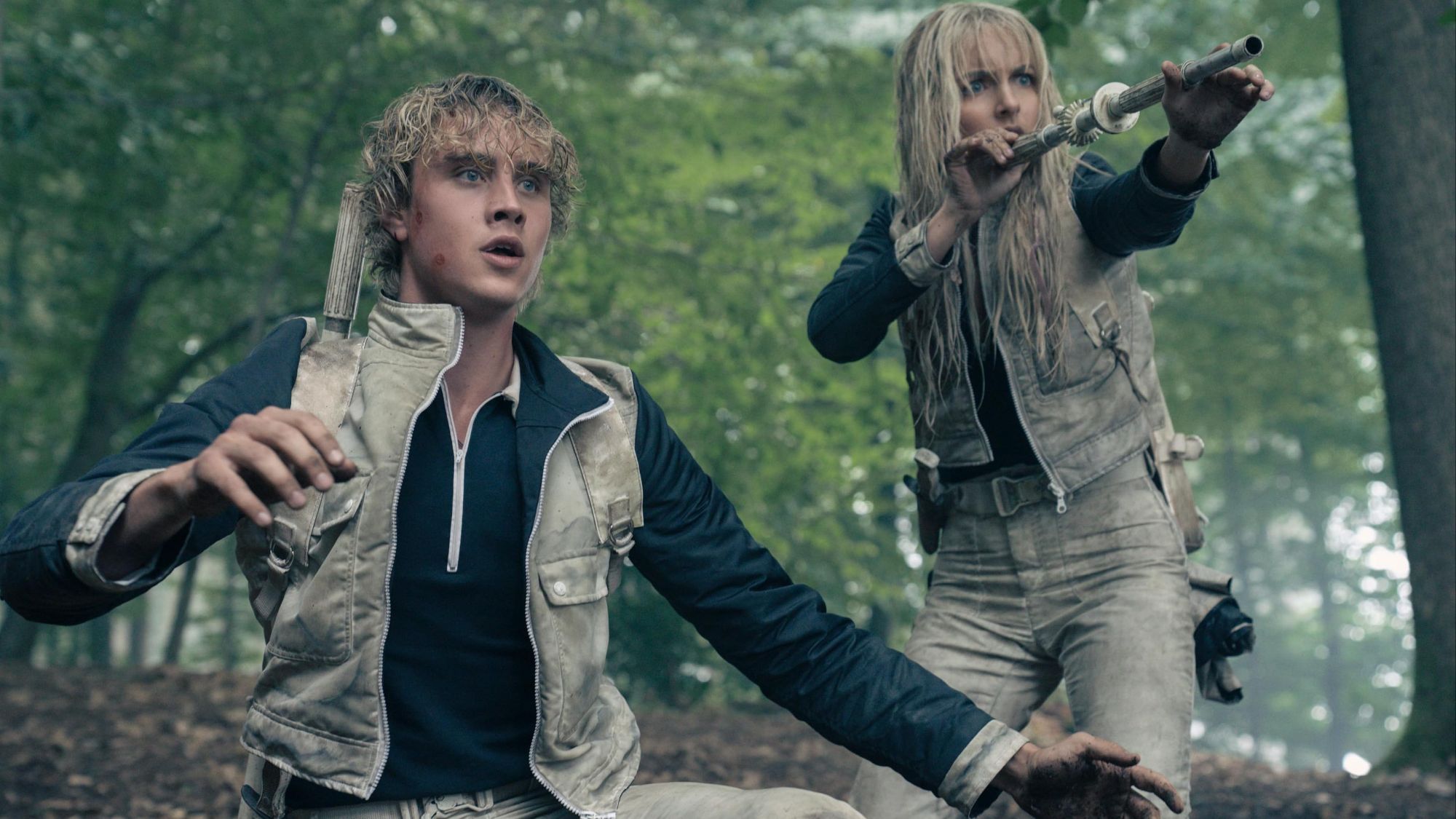
It’s the 50th Annual Hunger Games, the 2nd Quarter Quell (in which special rules are implemented), and this year, four tributes will be selected from each district. When one of the tributes tries to flee and is killed, Haymitch Abernathy is chosen in his place. When disaster strikes prior to the start of the games, Haymitch commits an act of defiance against the Capitol and President Snow (Ralph Fiennes, The Grant Budapest Hotel), and the President is not so easy to forget it. He forces Haymitch into a dangerous and precarious situation during the games, set out to target him and eliminate him with extreme prejudice, but Haymitch has allies as well, including the young District 3 tribute Ampert, who is organizing an alliance against the Career tributes, and Ampert’s father Beetee (Kelvin Harrison Jr., Elvis), who helps Haymitch plan a sabotage against the games from within.

I haven’t been really swept away by the Hunger Games franchise since Catching Fire; Mockingjay didn’t need two films, and The Ballad of Songbirds and Snakes was a movie of hills and valleys, and rather forgettable after the fact. All that being said, Sunrise on the Reaping is terrific, a much more emotional installment with enough to connect it to what’s come before with plenty of twists and turns to the traditional formula. Joseph Zada may look nothing like Woody Harrelson, but his vocal performance captures so much of the flavor of Harrelson. In fact, much of the cast is comprised of actors playing younger versions of established characters, and many of them capture the vocal cadence of their prior players without coming off as hokey. It’s easy to become lost in the numerous characters in this franchise (by all accounts, Francis Lawrence has directed a lot of child deaths across these films and The Long Walk), and having these little cues and tics represented across the different performances helped ground this film to the main franchise in a way that The Ballad of Songbirds and Snakes was unable to (which makes sense, as Sunrise on the Reaping is only 24 years before the franchise’s first entry). In addition to Zada, Jesse Plemons (Bugonia) shines as a younger Plutarch Heavensbee, originally portrayed by Philip Seymour Hoffman, and Kelvin Harrison Jr. does a lot with a little as a younger Beetee, made famous by Jeffrey Wright).

The new characters are also performed quite well, with a lot of attention given to the simple but powerful work by Mckenna Grace (I, Tonya) as twin sisters Maysilee and Merrilee Donner, the former selected for the Games, and also to Glenn Close (Guardians of the Galaxy) who really goes nuts as the unusually screechy and often grating Drusilla Sickle, who plays the District 12 escort for the Games. Grace is just fantastic in everything, and with so much franchise work in her past, I’m sure we’ll see plenty more of her in the future. As the Donner twins, Maysilee in particular, she gets to stretch a lot of anger and ferocity in her character and gets plenty of moments to give an undercurrent of tenderness as the Games wear her down. Glenn Close is such an unexpected choice for this film and this character, and she leaves a memorable stain on every scene with her biting, ruthlessly cruel portrayal.
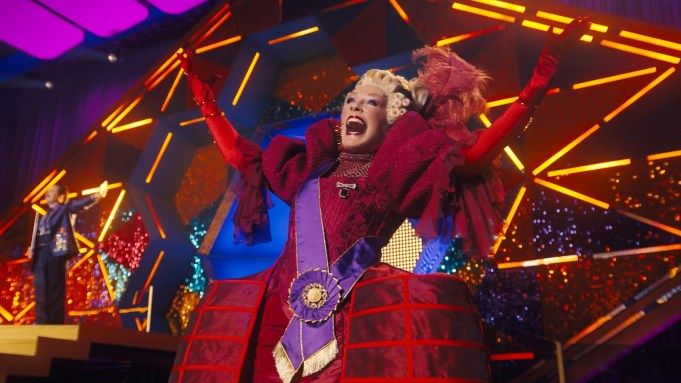
Sunrise on the Reaping looks excellent from top to bottom, with retro-futuristic, 70s-inspired sets and costumes, and the Games are well-designed, especially the secret areas that Haymitch needs to access in order to sabotage the Games, and the volcanic presence is felt from the very start. A lot of these Hunger Games films pulls from a pretty similar formula, so having strong set design, evoking an older and classical time period and design style, really helps to give Sunrise on the Reaping its own distinct look and feel.
Francis Lawrence directs the hell out of this film. You’d think after so many franchise installments with one director, things would get stale by his fifth film, but this is one of his best. He keeps the focus on Haymitch’s very personal story, keeping the focus on the target on his back, letting us know that he wasn’t supposed to be here; he was not randomly selected, he was chosen for this, targeted for this pain, and he decides to become the “worst victor in history” if he can survive, a radical with a plan to burn it all down. Lawrence works well with young performers and makes the most of the tenderness he can mine from these young emotional characters, and the hand-to-hand combat is some of the best in the whole series.

Sunrise on the Reaping is a bleak but wholly thrilling installment of The Hunger Games franchise, focusing on a fan-favorite characters origins but never feeling like a checklist of important moments, and while it fits snug in the middle, I’ll warn new viewers that some of the elements of this film do spoil bits of the main series, so watching in release order at first is recommended. All that aside, the performances are strong, the movie looks great, and even though a lot of these films run a similar formula, Lawrence and the writers give this one a few wrinkles that changes the story’s trajectory and allow it to feel fresh and unique, with some of the most shocking moments happening before the Games even begin. This is the best Hunger Games film in over a decade, dark and very bleak but completely dazzling all the way through.
4/5
-Kyle A. Goethe
For more Hunger Games: The Hunger Games: Mockingjay – Part 1
For more Francis Lawrence: The Long Walk



Leave a Reply