
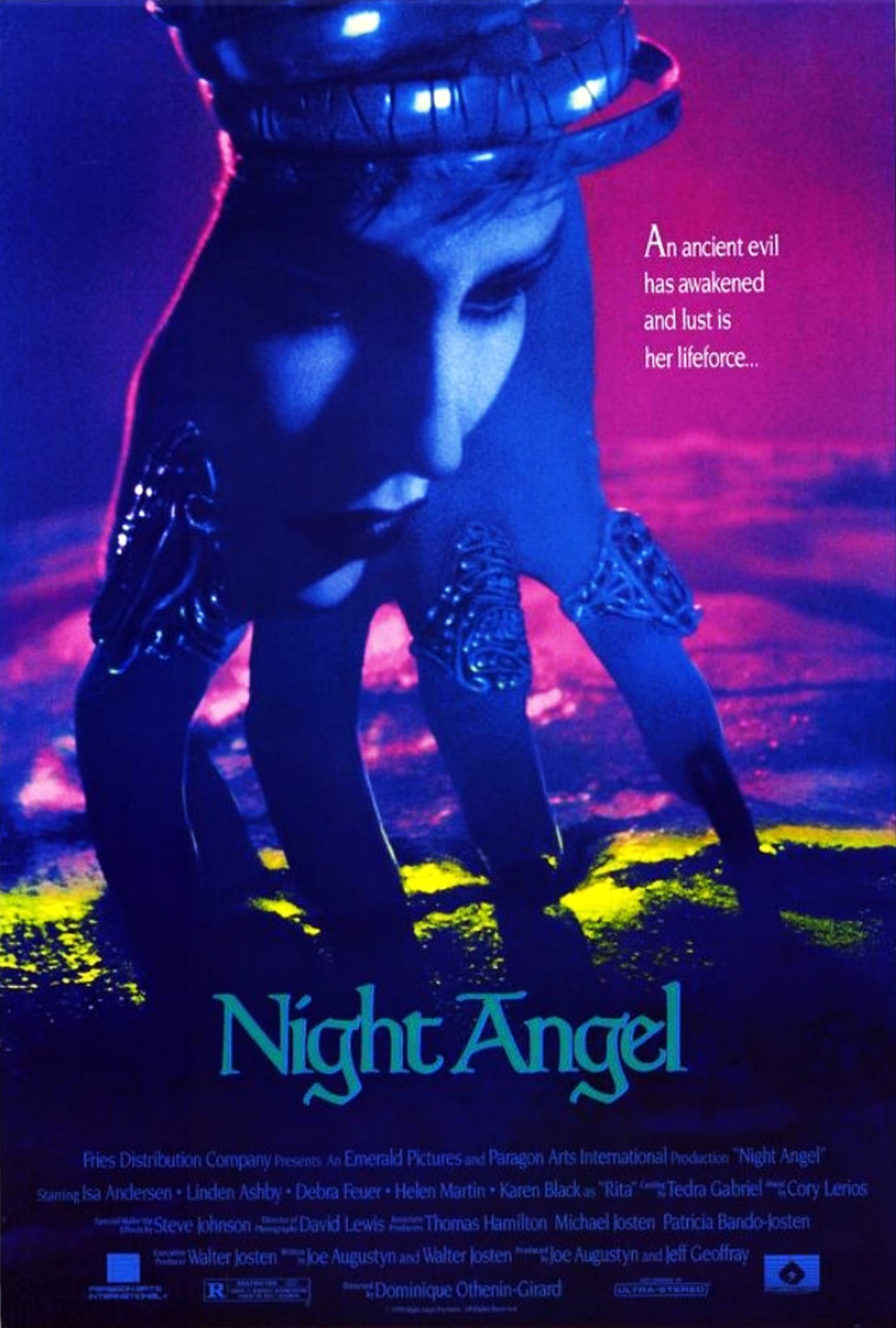
Director: Dominique Othenin-Girard
Cast: Isa Jank, Linden Ashby, Debra Feuer, Helen Martin, Karen Black
Screenplay: Joe Augustyn, Walter Josten
88 mins. Rated R.
I’m all for a good succubus story. The intersection of sex and death is one of the most common places for horror, especially the excesses of the late 80s and early 90s, to go. To be fair, Night Angel is not technically a succubus film, and I don’t think they ever refer to the villain in such a way (she’s a female sex demon), but in all ways that count, she’s pretty much a succubus. Whenever she has a sexual encounter with a man that leads to death, most viewers are going to say, “Okay, but hear me out…”
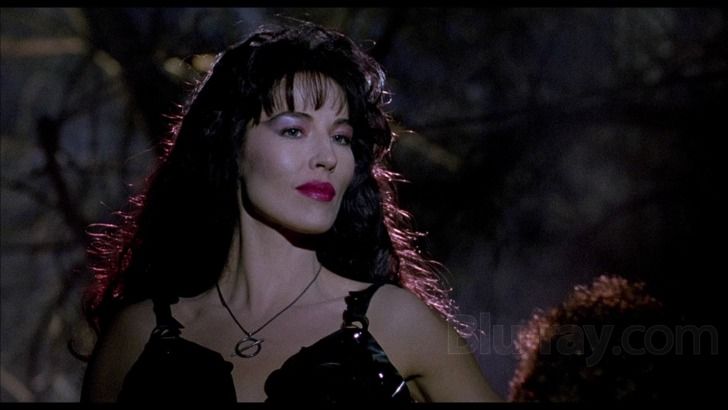
Lilith, (Isa Jank, Querelle) a powerful she-demon, has reawakened in the body of a stunning model, and she has her sights set on the fashion world. She’s particularly interested in Craig (Linden Ashby, Resident Evil: Extinction), who works at the magazine. As she lays and slays across the magazine’s staff, working her way closer to Craig, he becomes aware of her power over him, but can he stop her before he’s brought into her web?
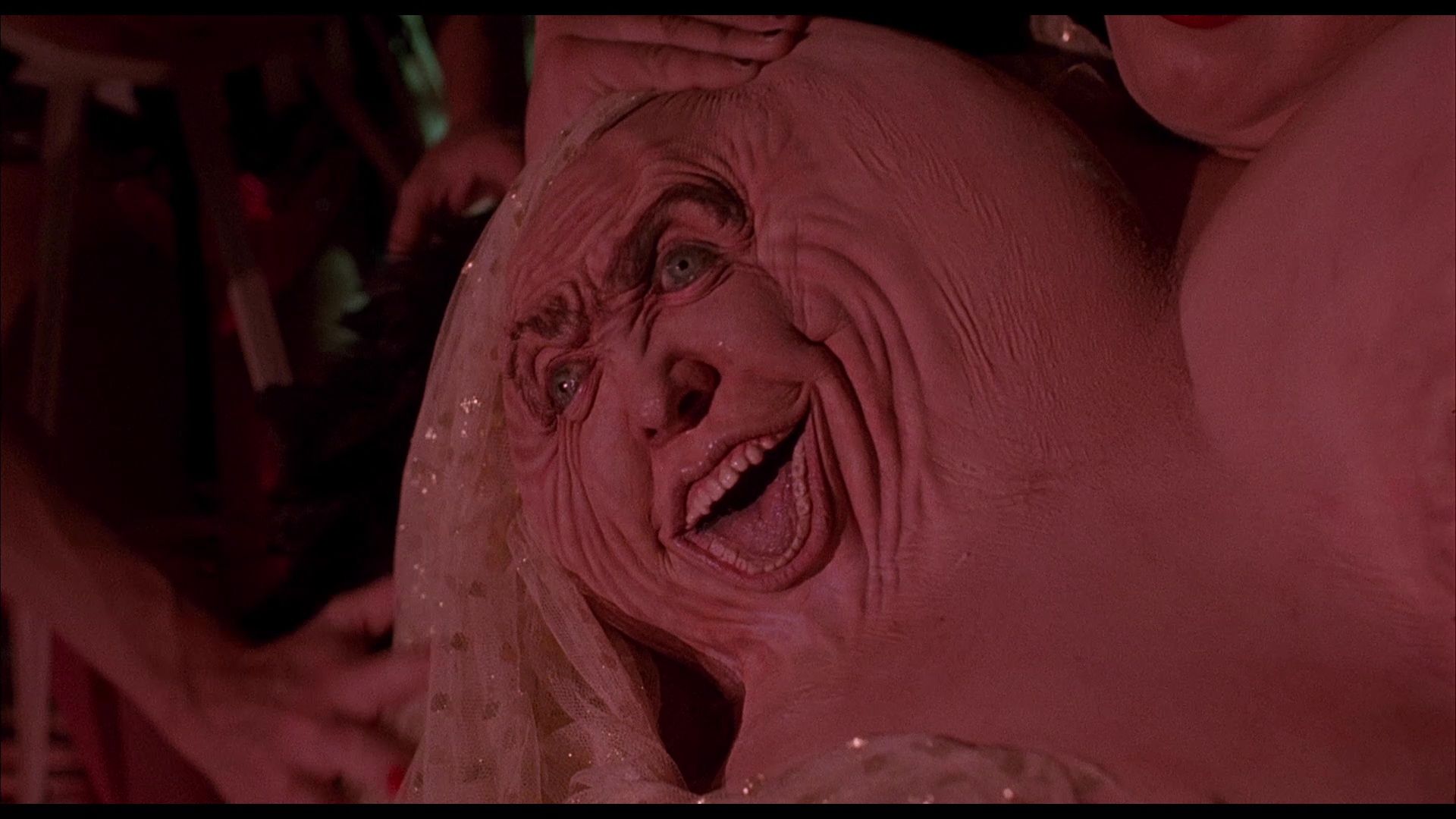
Directed by Dominique Othenin-Girard, right off the heels of Halloween 5, Night Angel is a very different and much more bombastic and over-the-top kind of horror that plays nicely off the body horror and gore effects of the recently-released Society. There are dream sequences and horror moments spread across the film that I’ve never quite seen in another movie, and credit has to be given for the batshit crazy moments and the practical effects used to create them which are quite realistic and occasionally astonishing. Had the story surrounding these effects been stronger, I think Night Angel’s effects work would raise it to another height of cult classic horror status.
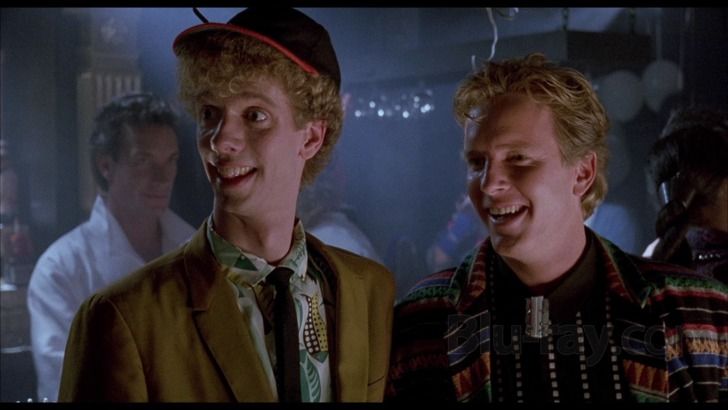
The details are all in place to make this a winner, but the screenplay is a bit all over the place, playing with salacious ideas without ever really capturing them in an interesting way or using them to propel the story, so it feels longer than a movie like this should feel. Horror movies that feature a lot of effects and sex tend to move rather quickly because there’s always something happening onscreen, but the structure and editing from scene to scene halt this one up too much, and there are long stretches that just aren’t very fun. Don’t get me wrong, the movie has some great scenes within, especially a dance-off featuring a very youthful Doug Jones at a nightclub and a few choice dreamy sequences in the back half, but its unevenly organized so that the effects are the saving grace instead of the toppings on a cheesy pizza.
There’s a lot of sex in the film, but it’s obvious that body doubles were used for most of it, and I understand the practice quite well, but when the film is so built around carnal attraction and sexuality, having so many body doubles reduces the artistic nature of the photography and when it’s this obvious, it kind of removes a lot of the sexiness of the proceedings. Othenin-Girard does the best he can to capture it, but it’s just too frequently similar due to the constraints behind-the-scenes, and casting performers who are comfortable with the sexuality would have benefited the experience. Consider the dirty old man rant over.
Still, Ashby has chemistry with his leading ladies, most notably Kirstie (Debra Feuer, To Live and Die in L.A.), and the two are able to create some steaminess that’s necessary in a film like this. Ashby has always been an actor I’ve really liked seeing in larger roles, but his career never found its way there, so I’m thankful he had some time to shine here, and his character work is pretty great. Ise Jank does pretty good at embodying Lilith (a perfect she-demon name, later used as the lead vampire’s moniker in Bordello of Blood). Doug Jones is also excellently animated here, feeling like a heightened side character from a Tales from the Crypt episode, and he makes a lot of his scenes better by his presence.
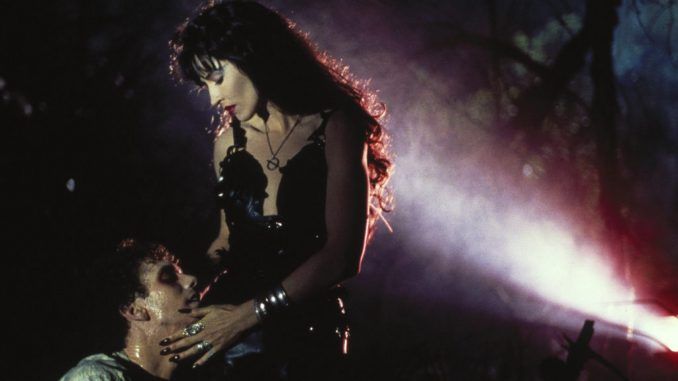
Night Angel has some interesting reveals and mythology, and some of the best practical effects of the era, and it’s a shame that it’s more difficult to find in a high-quality print, with used copies of the Kino Lorber edition being pretty costly on the secondhand market and no current streaming availability, and I can see why. It’s a smaller studio film with a rough script and no cultural significance outside of a supporting role for Karen Black (House of 1000 Corpses) and some very early work from Doug Jones. There’s some good stuff here, and I can see the film growing on me in the future, but the writing and editing drag down the film, making the genre actor appearances the exemplary effects work being the element holding it all together.
2½/5
-Kyle A. Goethe
- For more Dominique Othenin-Girard: Halloween 5: The Revenge of Michael Myers


Leave a Reply