
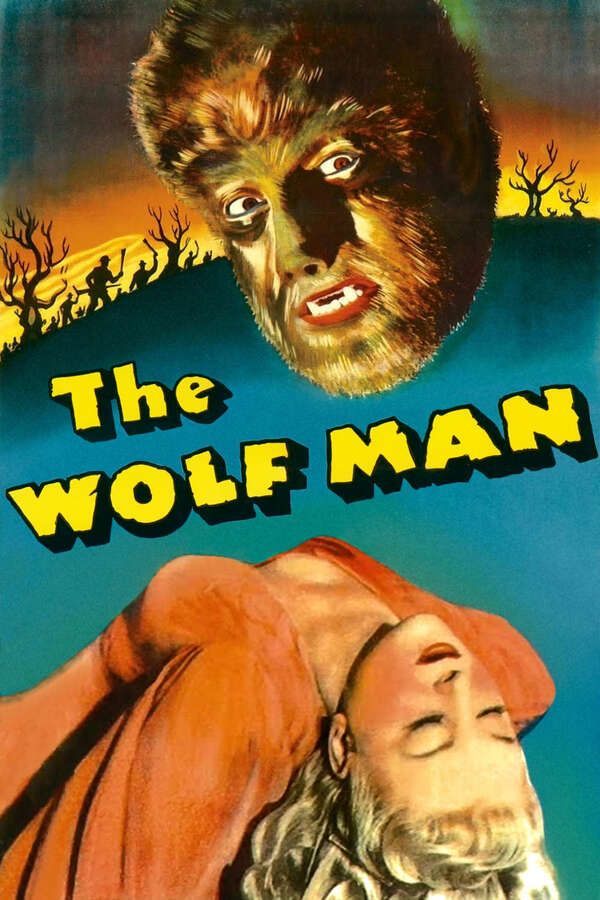
Director: George Waggner
Cast: Lon Chaney Jr., Claude Rains, Warren William, Ralph Bellamy, Patric Knowles, Bela Lugosi, Evelyn Ankers, Maria Ouspenskaya
Screenplay: Curt Siodmak
70 mins. Approved.
Thirteen years on with 31 Days of Horror, and I’ve not touched on Universal Horror much. Horror classics are the types of films that I’m not sure I can add much to in the conversation. All the same, I fear that some horror fans still ignore classics and black-and-white films because they are “old.” Old or not, it comes to film fans to carry the torch for these films and keep pushing. As such, my wife has only seen one classic Universal Monster film from start to finish, and this year, I felt compelled to share another: The Wolf Man, my personal favorite, stands apart from the others in that it isn’t based on a book and it’s not even the first Universal Monster film to feature lycanthropy, but it’s still the one I love most.
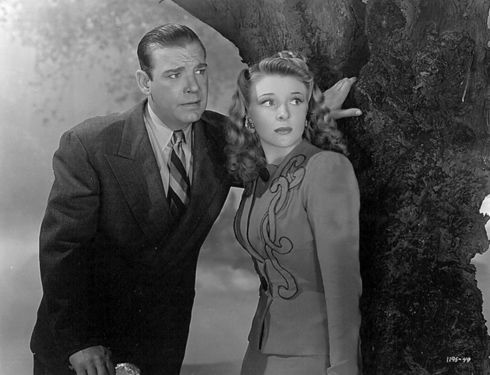
Larry Talbot (Lon Chaney Jr., The Haunted Palace) has returned home to bury his brother and try to put things right with this father, Sir John (Claude Rains, Casablanca). While home, Larry becomes smitten with a local shop girl and purchases a wolf’s head cane from her shop. All around the village, the residents warn of werewolves and pentagrams, but Larry dismisses it. One night, he takes the shop girl, Gwen (Evelyn Ankers, The Invisible Man’s Revenge) and her friend to see a Romani fortuneteller, Bela (Bela Lugosi, Dracula). Later, Larry is attacked by a wolf, bitten, and Gwen’s friend is killed. Now, Larry finds himself changing into a hairy beast and murdering villages marked with the symbol of a pentagram on their hand. Larry has to find a stop to the transformations before he changes again.
It’s a classic story that’s been recycled for decades, and maybe that’s one of the reasons that there are less successful werewolf films than vampire films; too many movies are just trying to follow the formula too closely. The ones that standout often have a hook or stylish flair to distinguish themselves from The Wolf Man. Director George Waggner told the story in a fairly economic way with lots of atmospheric fog and a heavy dose of “fear of outsiders,” both in Larry and also the Romani people who have come to the village.
The Wolf Man also confronts mortality with the loss of Larry’s older brother prior to the start of the film. Now, Larry’s in a position to inherit the responsibilities of his father’s role after John Talbot Jr. (the namesake) passes. He’s NOT the Junior, not the direct line, but now he’s looking down death and charged to “take his brother’s place,” sadly, in more ways than one.
Larry’s a sympathetic and good-natured guy (if you overlook his unusually aggressive manner with Gwen, which does not age particularly well), and Lon Chaney Jr. Imbues him with a kindness and gentleness that makes the bite and the transformation all the more tragedy, especially when viewed through his heroic act of trying to save Gwen’s friend. His is the saddest performance in the entirety of the Universal Monsters films, and it stays in the mind long after the finale, likely also in part to him being the only star of these films to return as the character in each subsequent installment (five total appearances in all).
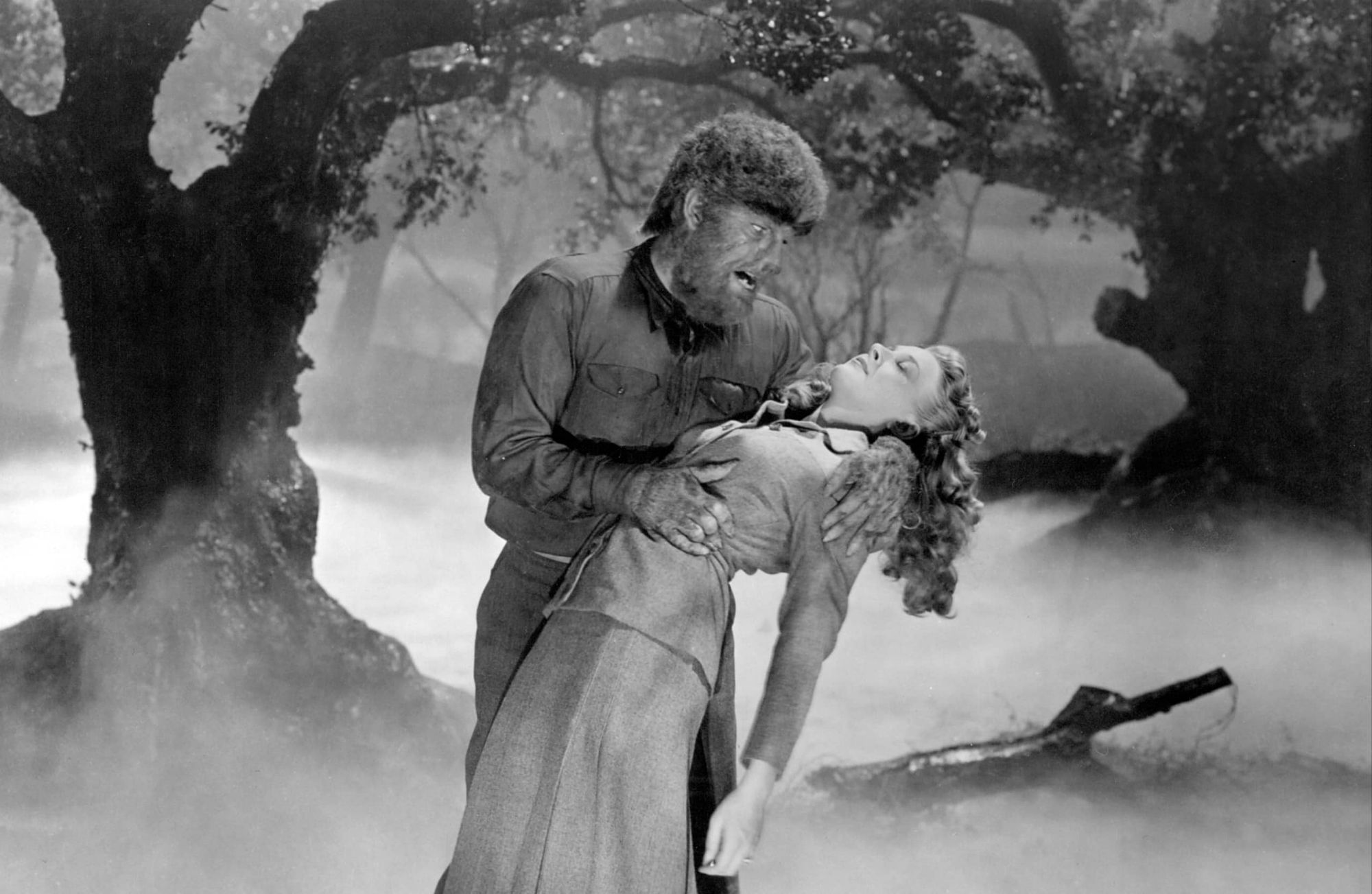
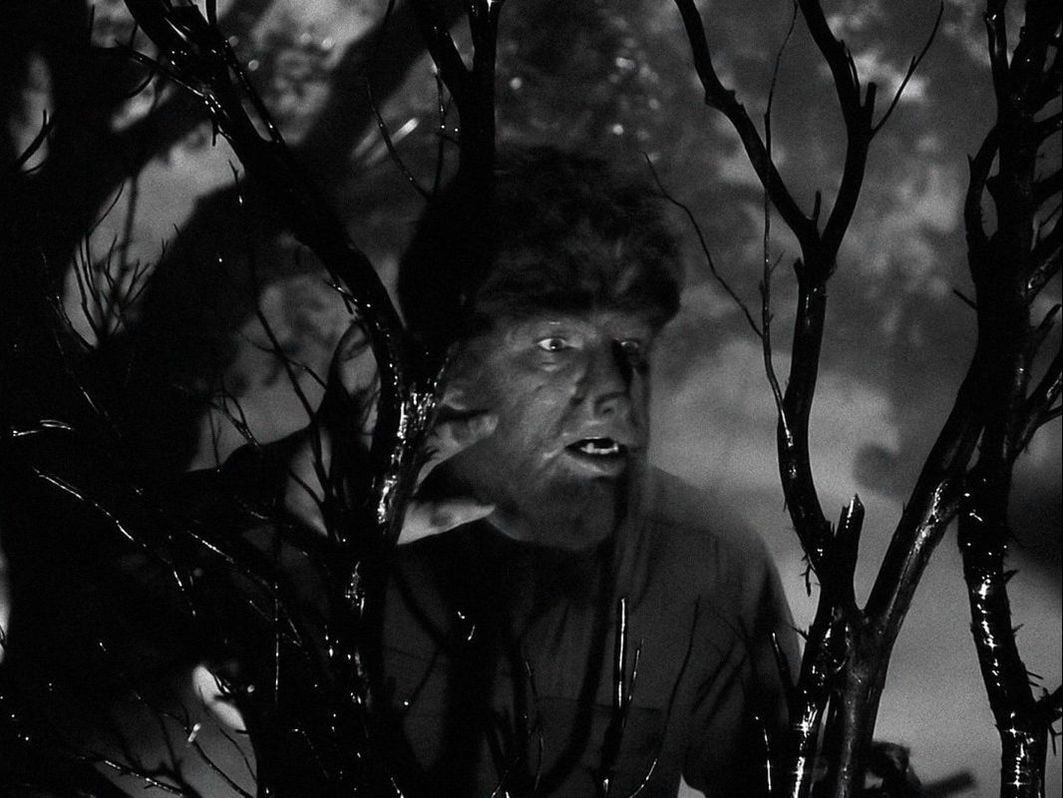
Most werewolf films live on their practical effects, and The Wolf Man does a lot with just a little. The legendary Jack Pierce crafted wonderful face applications for Chaney and, even though we don’t get much in a physical transformation onscreen, the look has become iconic because you can still see Larry under all of it. There’s still a man there in the Wolf MAN. Originally, Curt Siodmak’s screenplay never showed the creature, and we’re left to wonder if it’s all in Larry’s head, which feels like a cop out. Waggner’s finished film leaves no trace of uncertainty, and it’s another reason the director deserves more credit. I’ve always been more of a fan of bipedal humanoid lycanthropes over the full-on wolf or dog-like transformation, and Larry’s change into the Wolf Man is simple, creepy, aided by Chaney’s performance (always more subtle than his father, exactly what the role needed), and still effective 85 years later.
The film actually popularized much of the werewolf iconography and mythology with silver bullets and pentagrams on the victims. Prior to this, much of lycanthropy in written works varies greatly on the mythology, causes, and symptoms of this “curse,” but future films would take a lot of cues from The Wolf Man except, ironically, the full moon, which I don’t believe it featured at all in the film. Now, I do believe we tend to bestow ICONIC status on older films and ignore their flaws, but in the case of The Wolf Man, I just don’t see any.
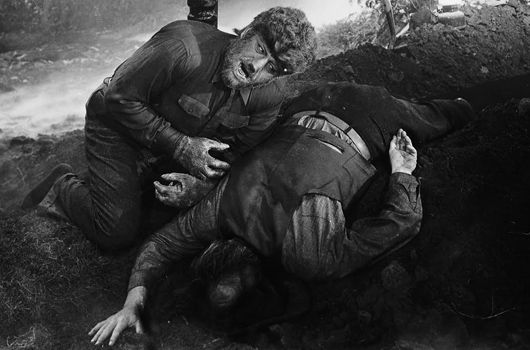
The Wolf Man is one of the most accessible of the Universal Monster films, a perfect entry point for those that avoid black-and-white classic cinema due to the age. At 85 years young, The Wolf Man is spooky, tragic, beautifully shot, and packed with a Fulci amount of fog. It has complex themes delivered in a satisfying and easily-parsed fashion, and it cruises at 70 minutes. This is the ultimate film for October, with chilly weather flowing in and shadows lurking in the night, for even a man who is pure in heart and says his prayers by night may become a wolf when the wolfbane blooms and the autumn moon is bright.
5/5
-Kyle A. Goethe


Leave a Reply