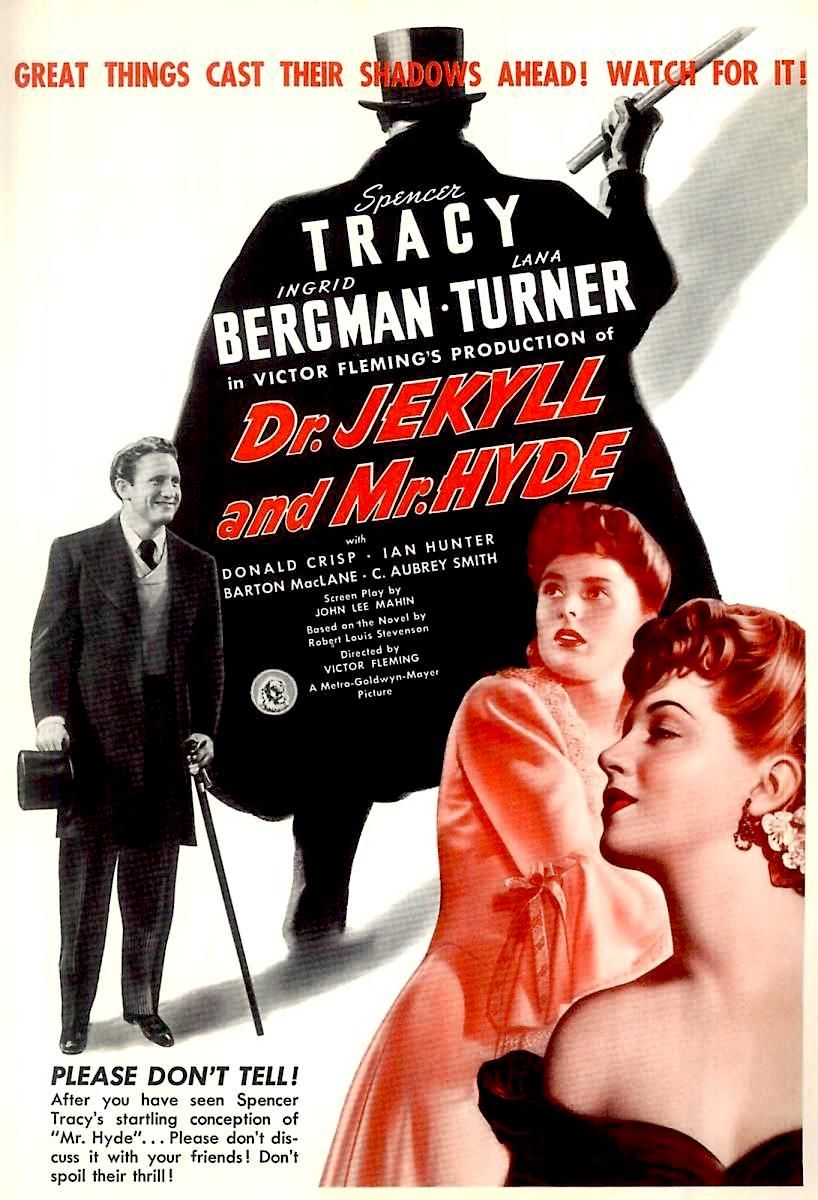
Director: Victor Fleming
Cast: Spencer Tracy, Ingrid Bergman, Lana Turner, Donald Crisp
Screenplay: John Lee Mahin
113 mins. Approved.
- Academy Award Nominee: Best Cinematography, Black-and-White
- Academy Award Nominee: Best Film Editing
- Academy Award Nominee: Best Music, Scoring of a Dramatic Picture
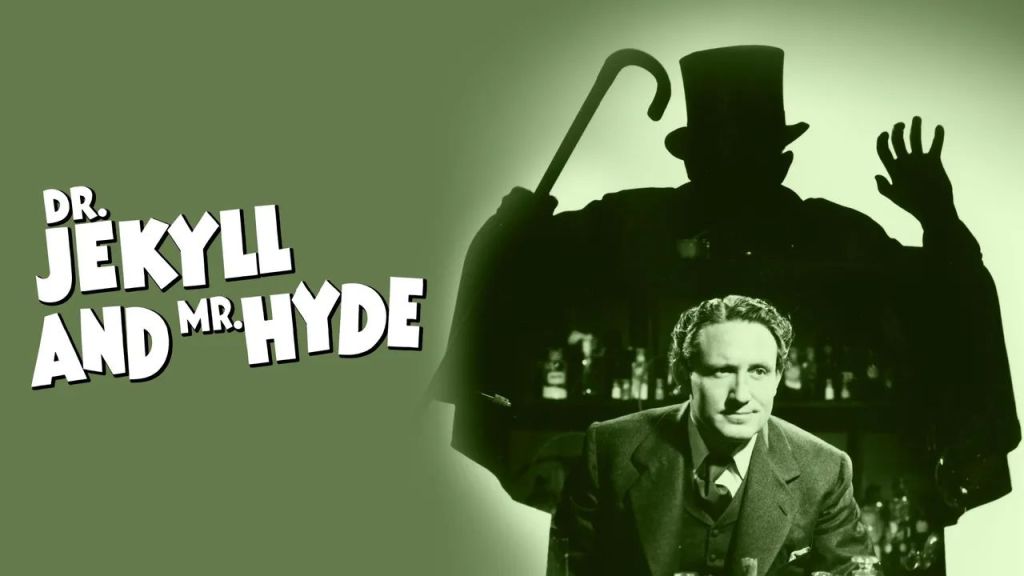
With most adaptations of famous works, the more times a story is adapted, the bigger it gets, almost like a tall tale or describing an epic fishing trip. In the case of Dr. Jekyll and Mr. Hyde, the 1941 film actually restrains itself significantly more than its 1931 predecessor, in large part thanks to the Hays code and some reservations by its legendary director coming off the best year of his professional career. His finished film is inoffensive and largely sanitized, leaving one to wonder why anyone would select it over its predecessor.
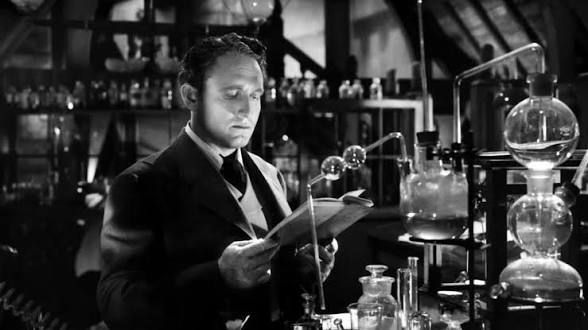
Dr. Henry Jekyll (Spencer Tracy, Judgment at Nuremburg) is a brilliant but quite obsessed scientist looking to separate the good and evil halves of a man. Seen as a radical by many, including his future father-in-law, he’s finally concocted a serum but learns rather quickly that the serum merely gives control over to his greater beastly counterpart, a villainous scoundrel by the name of Hyde. Hyde has it out for the attractive barmaid Ivy Peterson (Ingrid Bergman, Casablanca), but can Jekyll put a stop to the monster who takes control before anyone is killed?
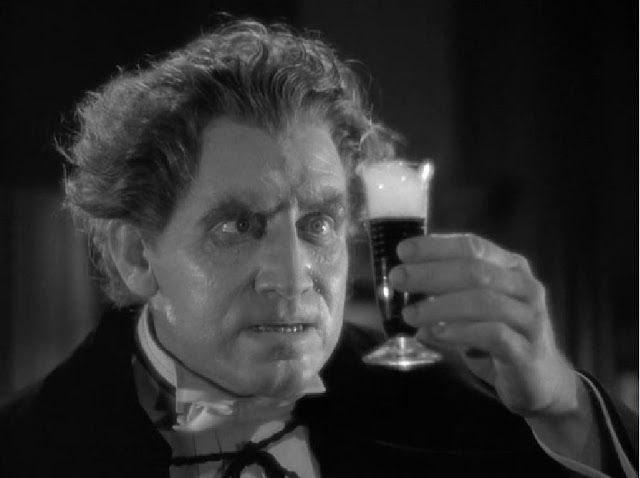
Victor Fleming was coming off the one-two bunch of making Gone with the Wind and The Wizard of Oz, both releasing in 1939 to awards and acclaim. Returning with essentially a remake of the 1931 film (I say remake as it heavily borrows some elements original to the 1931 film) is an odd choice here, but seeing them both highlights the destructive and censorship nature of the Hays Code and how it essentially cleansed the rougher edges and left behind a film that feels too bland to be memorable. The Ivy character is a barmaid now because you simply can’t talk about prostitution like they did ten years ago. The framework is rather similar here, but it ironically gives a lot of energy to a potential romance plot between Jekyll and Ivy as opposed to the woman he’s actually engaged to be married! There are also a number of quite suggestive moments of sensuality here, particularly in the positions of the performers during the various transformative dream sequences, moments where Ivy is bent slightly and Jekyll is positioned behind her, meant to evoke imagery of a horse-drawn carriage and rider but certainly feeling different. In sanitizing all the grim real-life elements, this movie feels suggestively naughtier.
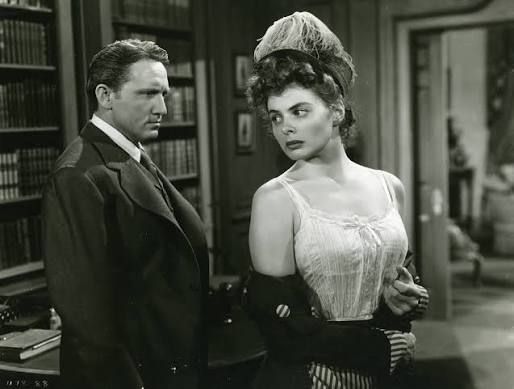
Spencer Tracy makes for a great Jekyll, but I’m not so sure that he pulled off an impressive Hyde, and after all, what’s one without the other? Tracy is a likable enough performer, but there isn’t much makeup on Hyde, the transformations are missing a crucial element of ingenuity, and Hyde just doesn’t get to do much villainy in the screenplay, coming off as a major asshole and abuser, but missing that true evil. As he’s our main character and conflict, a lot of the heavy lifting goes to the reactionary performance of Bergman, who is excellent here, a woman who has entered into a dangerous position in her life that has left her open to abusers, most notably the mysterious Hyde. Spencer Tracy has the warmth, but I think he dropped the ball on the villainy. Lana Turner (Singin’ in the Rain) plays Henry’s betrothed, and she just frankly doesn’t have a lot to do, so the movie needs that central relationship between Jekyll/Hyde and Ivy, one that is only partially successful.
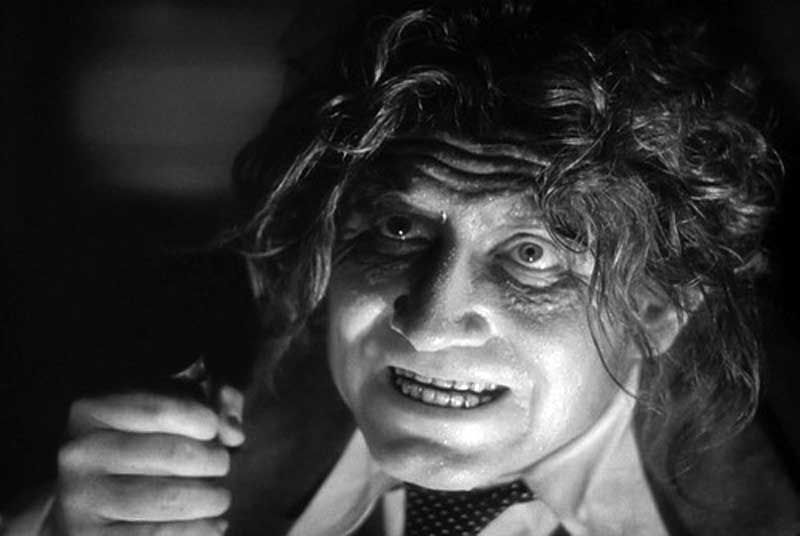
It seems like, from everything I’ve read, the creative team wanted to make some interesting adaptive changes, but the producing team was mostly interested in a straight remake, and at this point, there had already been two (1920 and 1931) major versions of the story, so coming up with an original idea and direction was key here, but it never materialized. Sadly, it’s cast and director give the impression of greatness, but this movie stands in the shadow of its predecessors, a longer but emptier take on the classic tale that wastes a lot of good talent. There’s nothing inherently bad about the movie, but I wouldn’t call most of it good or exemplary. It’s an inoffensive, probably more accessible version of the story for those looking to miss out on the horrors. Strong cinematography and music helped to earn Academy praise, but it isn’t enough to make this Jekyll and Hyde truly memorable in a sea of familiarity.
2½/5
-Kyle A. Goethe
![[31 Days of Horror XIII] Day 23 – Night Angel (1990)](https://goatfilmreviews.com/wp-content/uploads/2026/10/night-angel-1-678x381-1.jpg?w=678)
![[31 Days of Horror XIII] Day 22 – The Presence (1992)](https://goatfilmreviews.com/wp-content/uploads/2026/10/mv5bmjzmndrmnzqtnznlyi00mzewltkwyjctodm0odizy2mxymmzxkeyxkfqcgc40._v1_.jpg?w=750)
![[31 Days of Horror XIII] Day 21 – The Stendhal Syndrome (1996)](https://goatfilmreviews.com/wp-content/uploads/2026/10/image-w128028929.jpg?w=800)
![[31 Days of Horror XIII] Day 20 – The Wolf Man (1941)](https://goatfilmreviews.com/wp-content/uploads/2026/10/wolf-man_1.jpeg?w=1024)


Leave a Reply