
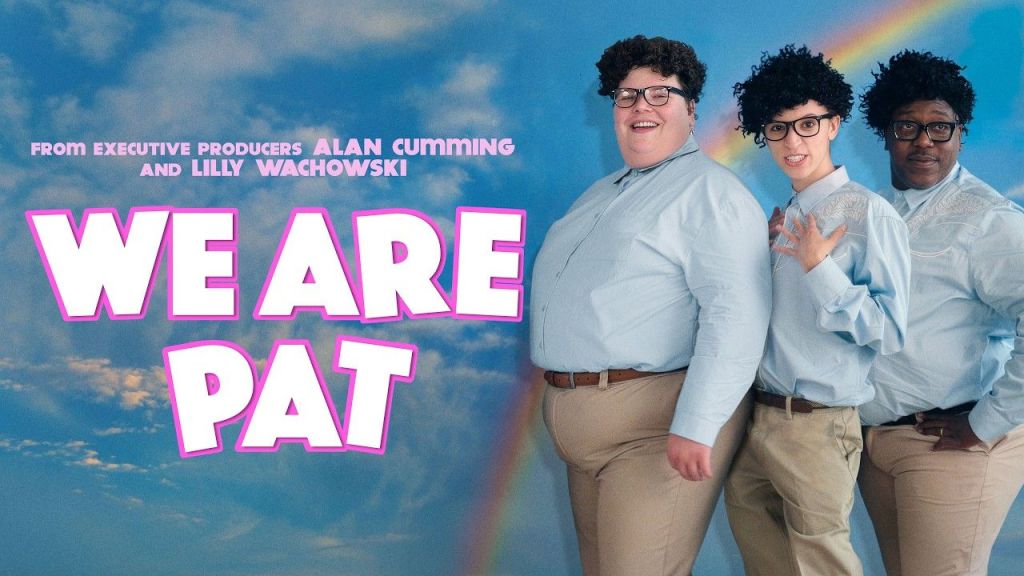
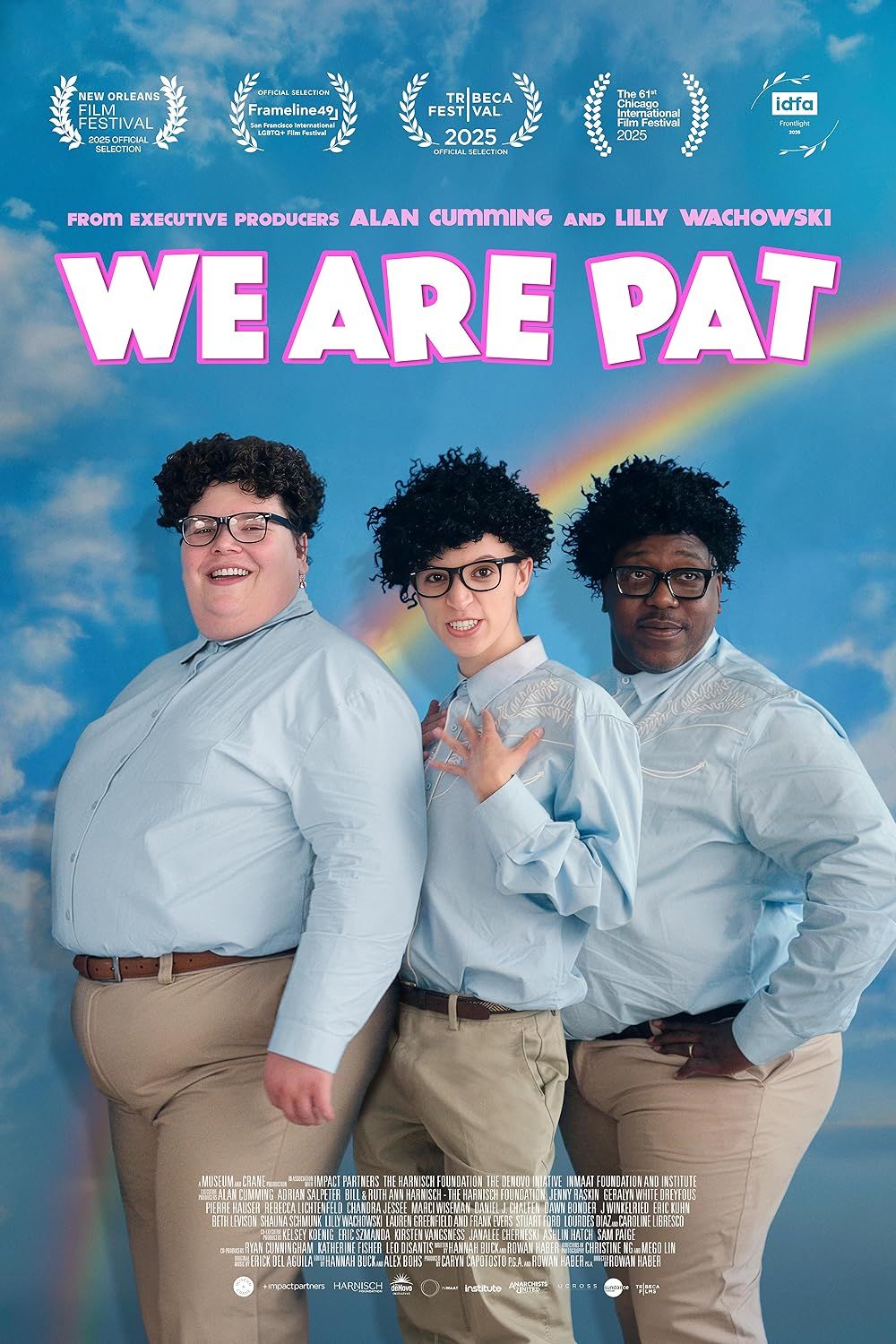
Director: Ro Haber
Cast: Julia Sweeney
Screenplay: Hannah Buck, Ro Haber
92 mins. Not Rated.
Time is an elusive and all-emcompassing element to the realm of comedy. It classifies some types of humor, and it reframes other types, which causes the viewing public to recontextualize it and either accept or reject it. I’m not one to be offended by off-color humor that hasn’t aged well, but I’m also of the demographic that is rarely targeted by problematic depictions of bullying, so I tend to see it from different angles. In terms of Pat, the androgenys character from Saturday Night Live and a subsequent poorly-received feature film adaptation, I’d always seen the central idea was really about everyone else’s response to not having a clear cut answer to something that’s not really their business moreso than about Pat’s actual confirmed gender ideology, but not everything has viewed that character like I did. In the new documentary, We Are Pat, transgender writer and director Ro Haber provides their background with the infamous character and attempts to “reclaim” Pat for the modern era. It’s also one of the best documentaries of the year.
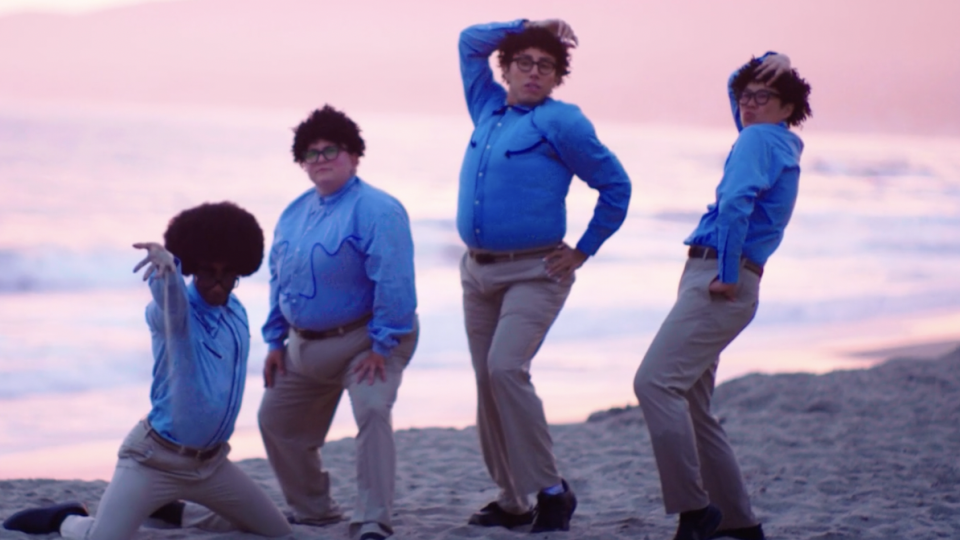
In We Are Pat, we are introduced to several members of the LGBTQ+ community who had come across Pat in their youth, each having drastically different interpretations of the character through their own lenses, and, led by Haber, they have set out to better understand the character through the creation of Pat by comedian Julia Sweeney (Pulp Fiction), through the public’s interpretation, and whether or not Pat can be claimed, or if they even should be. From there, they’ve crafted their own Pat sketches for the iconic character through the modern viewpoint to test their reclamation potential.
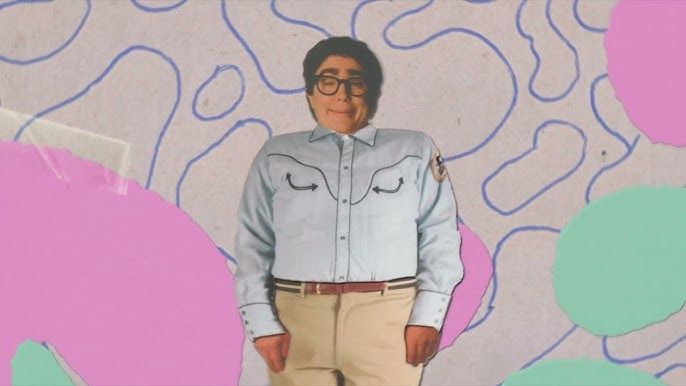
I was utterly fascinated with this unconventional deconstruction of Pat through the original SNL clips, the background of the character, and the movie itself, which I watched for the first time in preparation for this documentary. The movie, while not being very good, also confirmed, for me, the intentions of the character through the subplot involving nosy neighbor Kyle, played by Charles Rocket. Kyle spends the entirety of the movie uncertain of Pat’s specific gender identity, and the very notion that he doesn’t know sets him on the path to ruin, crumbling his world and causing a break with reality. It’s something that absolutely has nothing to do with him, and yet human beings are so dead set on putting others into groups that the very notion of a spectrum becomes difficult to understand and why so many want to cling to these earlier notions that they understood better. It’s stated in the documentary as well, with one subject calling it “cis people’s gender panic,” and I couldn’t have said it better myself.
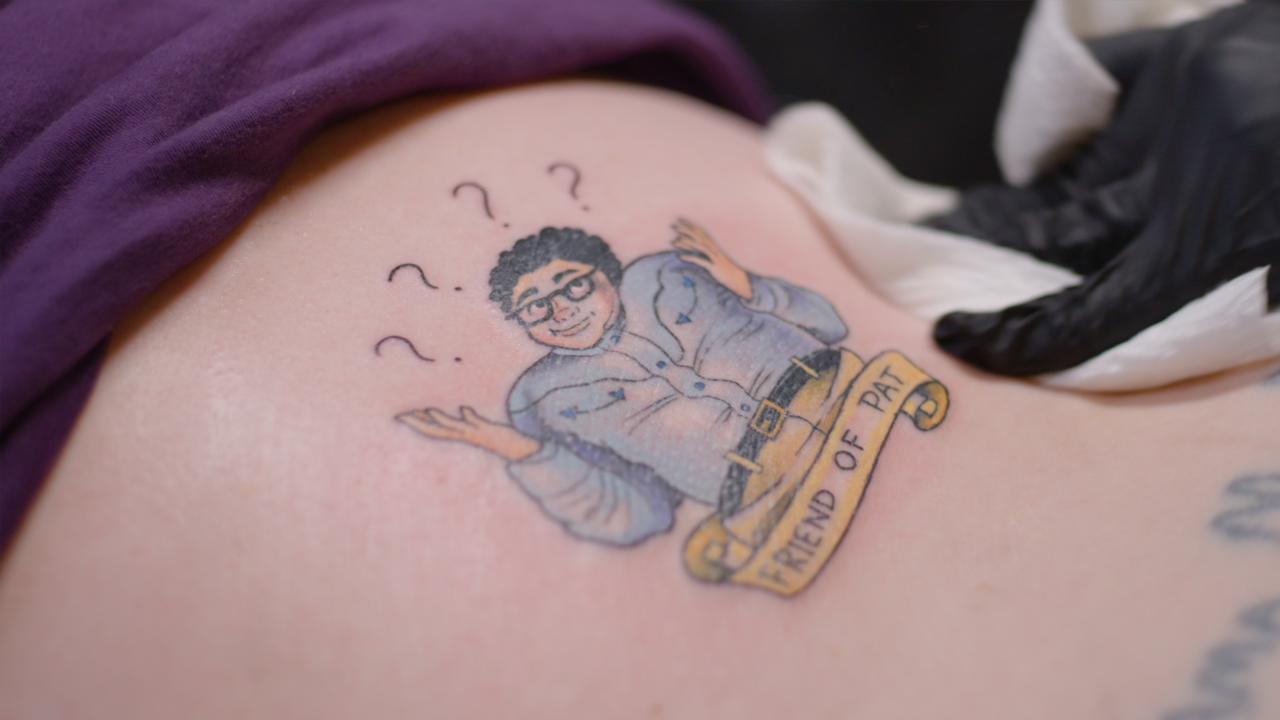
Some of the subjects of We Are Pat felt like I did, and others did not. The question is posited early and often: was Pat crafted as the joke? Once Julia Sweeney enters the picture, it becomes clear that her intention wasn’t that, but then we question who becomes responsible for the pain caused by Pat? Even the “It’s” part of “It’s Pat” gets discussed, and this is all done in a respectful dialogue that examines these facets of the character. There are many more viewpoints to the character of Pat that I could not have time or knowledge enough to dive into, but that’s what makes this film so fascinating: we all come to art and even comedy with our own learned experience and worldview, and Ro Haber isn’t afraid to push back and question all of it, never giving a definitive answer to these questions but allowing each subject to apply their own world to Pat.
There’s also an analysis of the history of vaudevillian and Shakespearean performance in the view of men playing women and gender performance, and this view of the past is matched by the rise of trans comedy in response to anti-trans violence. As I’ve always been taught, the best comedy punches up and not down, and anti-trans comedy has been met with an opposition in our current times. If anything, We Are Pat’s biggest problem is that we don’t get to see much of the response from our subjects through the creation of their own Pat sketches. We don’t get to see their finished product outside of a few moments here or there, and I’d have loved to see the follow through here.
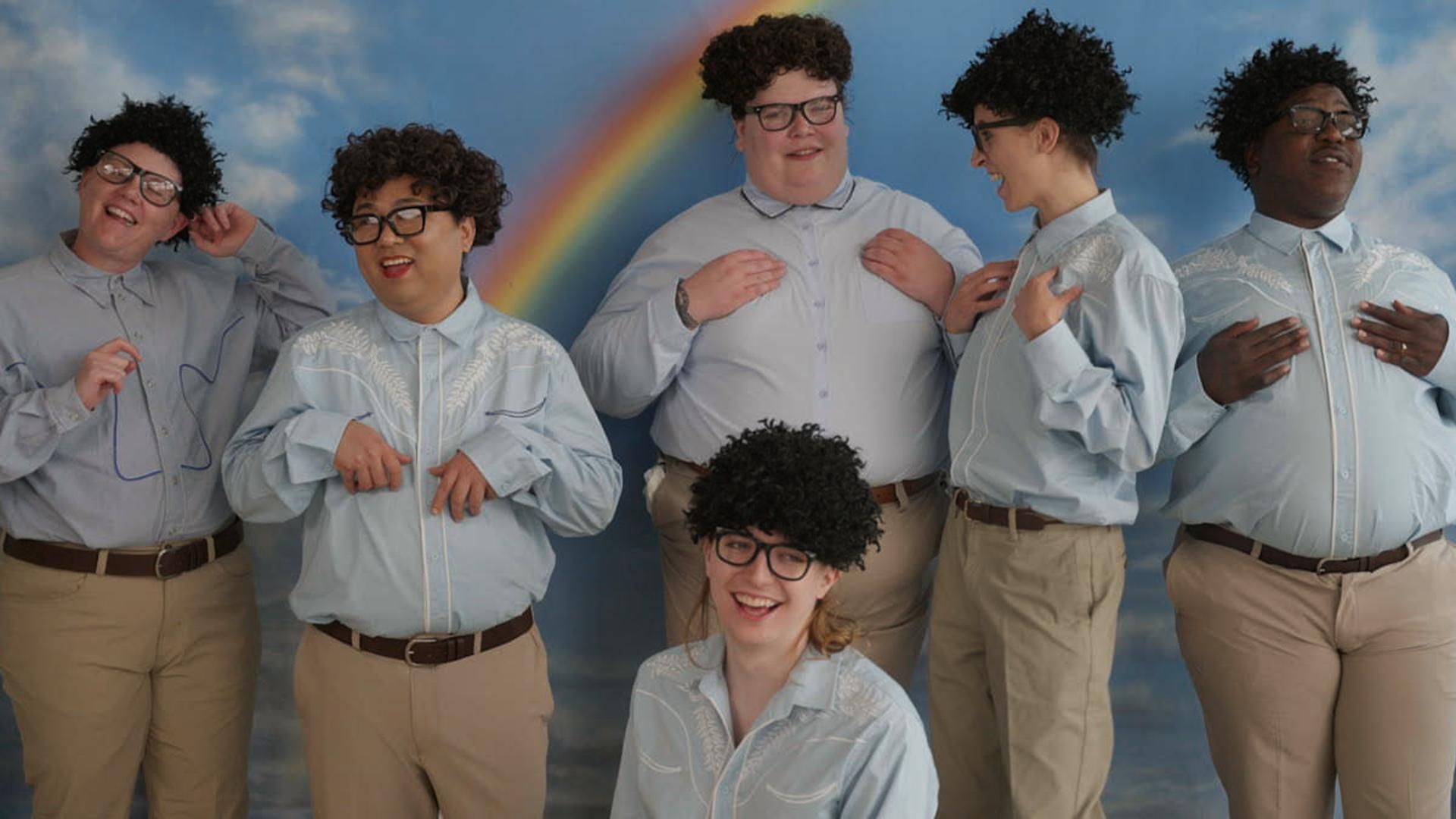
We Are Pat is surprisingly funny and thoughtful and utterly enthralling, a documentary that will test the limits of comedy and showcase the genre pressed through the layers of time. Comedy is the genre that I think falls under much higher scrutiny as it ages, and while I can adore a number of older, raunchy comedies, I can also recognize that sensibilites have changed, and the audience has evolved. This is a documentary that feels like a spirited discussion, and I appreciated the respectful back-and-forth of it all. Ro Haber has a handle on the material, and We Are Pat is never once talking down to its audience or even really telling them what to laugh at. Instead, it reframes and maybe even reclaims Pat, a character that I’ve always seen as an acknowledgment that maybe we’re all just a little too concerned with the personal lives of others. I loved this documentary.
4½/5
-Kyle A. Goethe
![[Early Review] Sense and Sensibility (2026)](https://goatfilmreviews.com/wp-content/uploads/2026/10/ss_fp_00124_r.jpg?w=650)
![[31 Days of Horror XIII] Day 14 – The Witches of Eastwick (1987)](https://goatfilmreviews.com/wp-content/uploads/2026/10/woe-1.jpg?w=1024)


Leave a Reply