
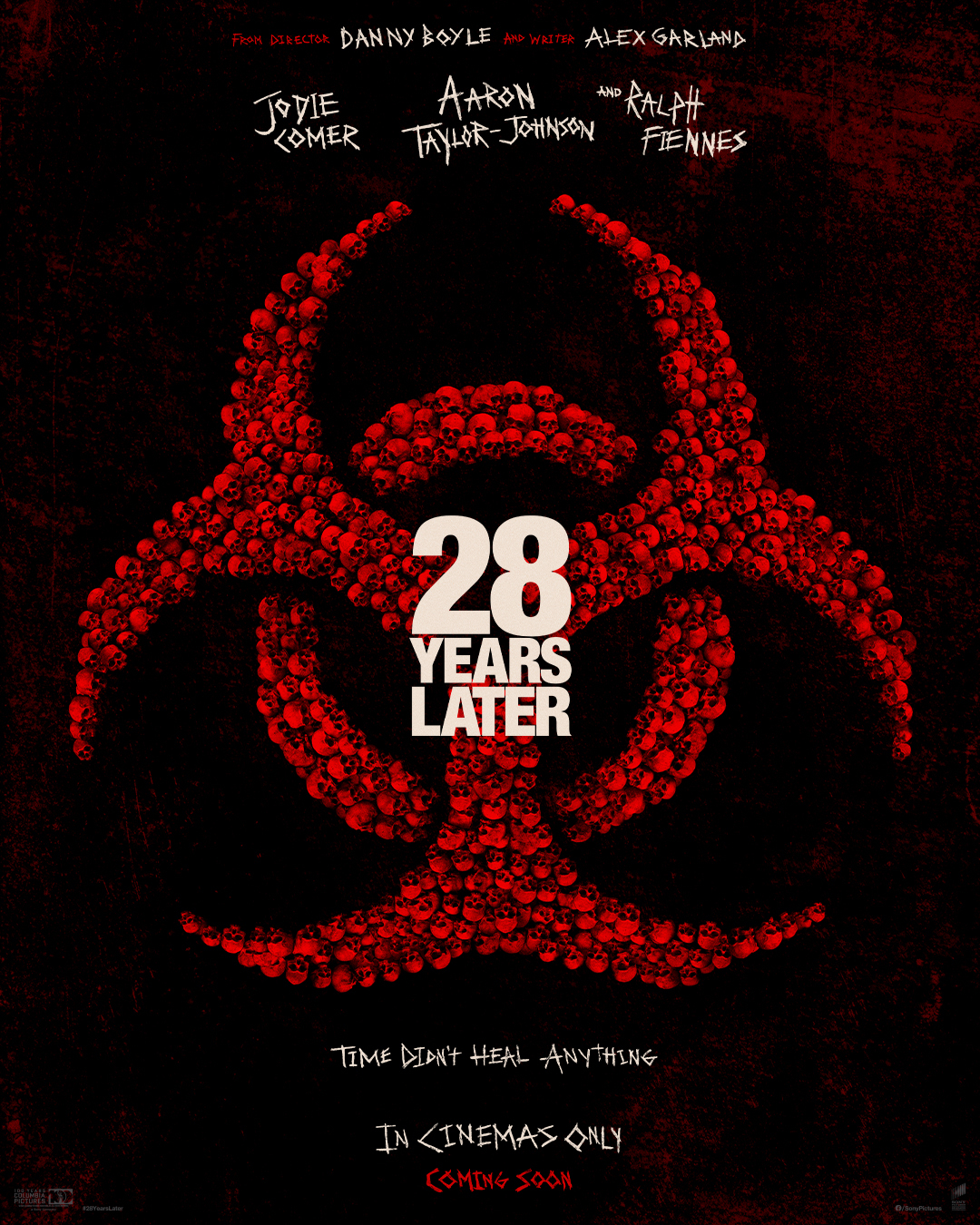
Director: Danny Boyle
Cast: Jodie Comer, Aaron Taylor-Johnson, Ralph Fiennes, Jack O’Connell, Alfie Williams
Screenplay: Alex Garland
115 mins. Rated R for strong bloody violence, grisly images, graphic nudity, language and brief language.
I was pretty sure we weren’t going to get another installment of the 28 Days Later series. We’d heard rumbling for years about the on-again/off-again potential of a third film, hopefully with returning director Danny Boyle (Trainspotting) and writer Alex Garland (Ex Machina), and when the first film became near-impossible to find on home video or streaming, it felt like the final gasp of the series, so find me surprised when they announced not just one new installment, but a whole trilogy with Boyle directing the first and Garland seemingly crafting all three. An even bigger shock is that it’s easily the best film of the three thus far.
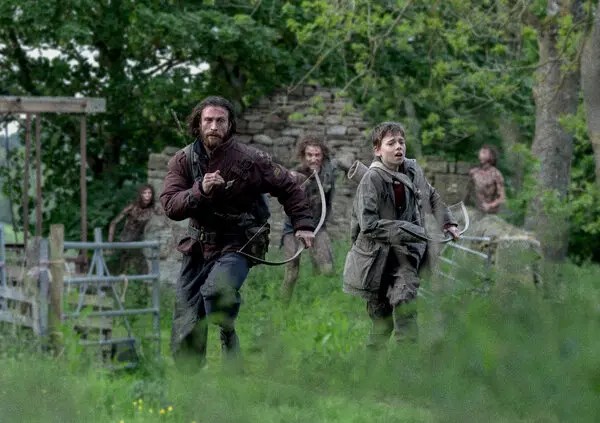
28 years after the outbreak of a rage virus wiped out most of Europe, Great Britain is still under indefinite quarantine. On the island community of Lindisfarne, only connected to the mainland via a tidal causeway that disappears at night with the rising tide, 12-year-old Spike (Alfie Williams) is ready to visit the infected mainland for the first time with his father Jamie (Aaron Taylor-Johnson, Nosferatu). Upon discovering the existence of an unusual and reclusive doctor on the mainland, Spike vows to take his ailing mother Isla (Jodie Comer, Star Wars: The Rise of Skywalker) to see him, hoping to find an answer and a cure for her sickness, though his father forbids him to do so.
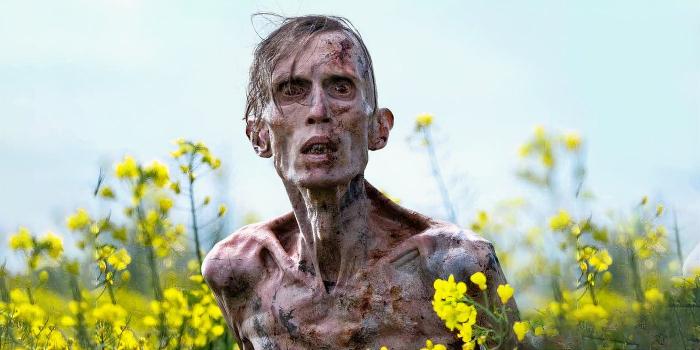
Much like the previous films, 28 Years Later opens with a small story set during the initial infection, setting into motion an important character to our story, before catching viewers up to speed. No, I don’t think this film inherently requires having seen the other two (though it would appear that the next film, directed by Nia DeCosta, could definitely see some returning franchise characters), and Garland’s screenplay very simply uses his coming-of-age screenplay to give viewers all the information they need to understand this world, showing us the community, the causeway, and the introduction of Alpha infected, which are suped-up versions of the creatures.
Garland has always been a terrific screenwriter, but his ability to blend difficult tones together in this film is excellent. So much of what he’s working with early in the film is disturbing, depressing, and intense, and yet he’s able to take a new character, a child, and make his growth the central narrative of the film as Spike learns a new normal in a world of new normals. Spike’s story is one of great tragedy and confusion as he risks everything, often foolishly, to save his mother.
Beyond all of that, though, is Garland and Boyle’s combined ability to mine this intense tale for moments of beauty and hope. The landscapes are stunning, and there are some wonderful character moments between Spike and Isla. There’s even an incredible interaction between Spike and another character in the third act that forever alters his view of the world around him, and I loved seeing these little moments of reframing for the young protagonist, played to perfection by Alfie Williams.
Boyle finds a happy medium between the frenetic, often unpleasant cinematography of 28 Days Later and his more lush and entrancing visuals of Slumdog Millionaire and 127 Hours, and he even finds a few new tools, like this dual-angle pause whenever an infected is hit by a bullet or arrow. His approach to Garland’s more hopeful screenplay matches the time of release. Whereas 28 Days Later was mostly crafted in a pre-9/11 world, we are now in a post-pandemic world, and if hope can be found in their infected world, perhaps it can be found here as well.
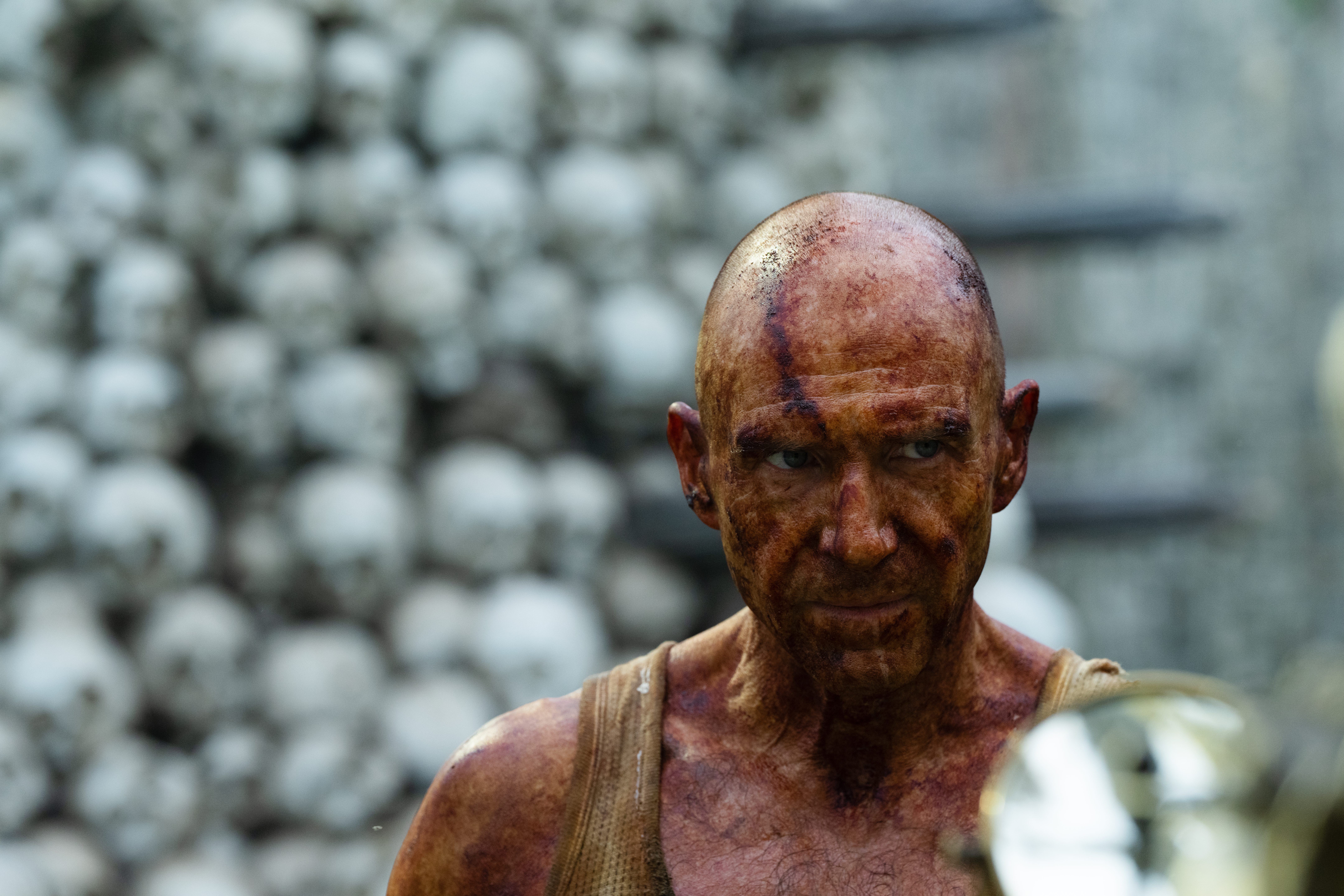
One last thing I can’t fail to mention is the excellent performance by Ralph Fiennes (The Grand Budapest Hotel) as Dr. Kelson. I don’t want to get into much spoiler territory here, but I’ll say that he has taken the character as seen on Garland’s pages and made him into one of the best characters of any film, a peculiar and somewhat unpredictable person living alone for decades, the only problem that I wanted more of him in the finished film.
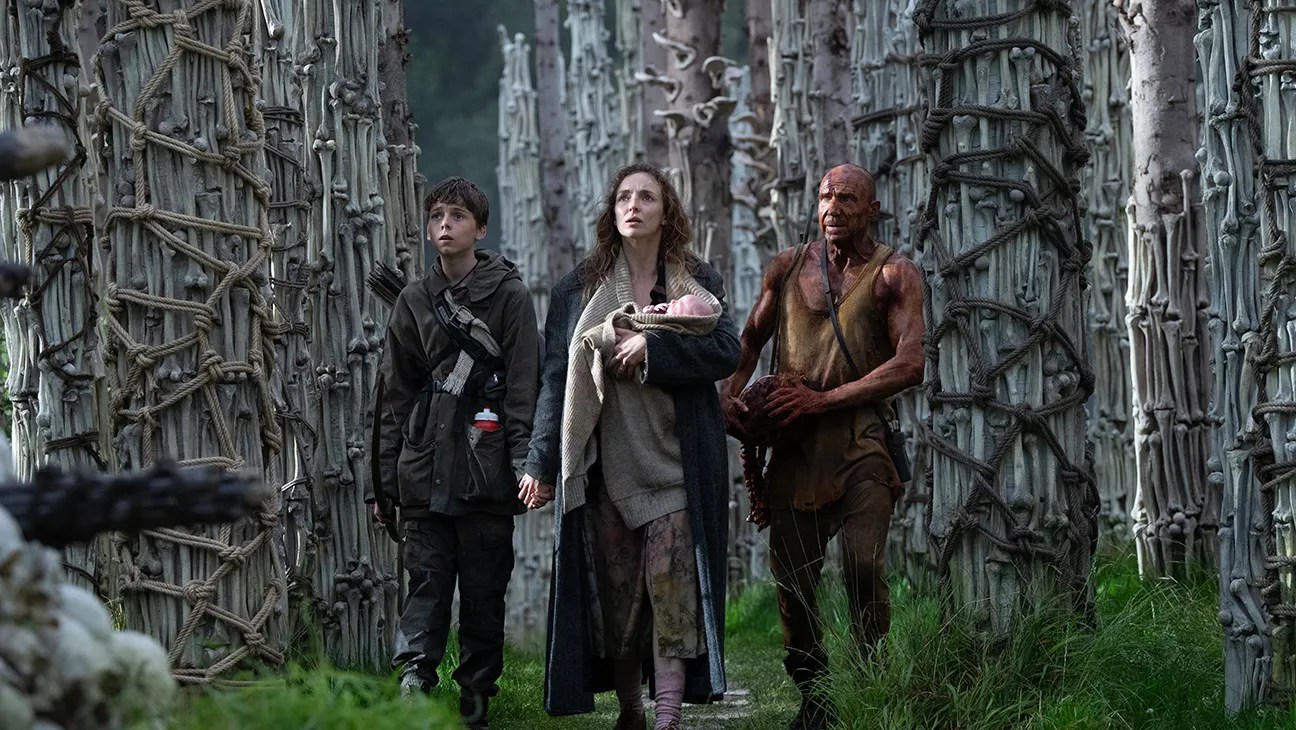
28 Years Later is the best film in the series thus far: there, I said it. It’s thrilling and bleak, but it’s also surprisingly beautiful and somehow hopeful. The film functions as a traditional coming-of-age played against an infected world. It also contains two sequences that I’ve never seen in a movie before (one in a train car and the other near a tower near the end of the film), both of them being hard to describe out of context, but both of them so very powerful. Between the heartwarming character arc of Spike and the next level performance by Ralph Fiennes, there’s so much to love in 28 Years Later, and it has me more than a little stoked for the next installment, but this is a high bar to clear.
4.5/5
-Kyle A. Goethe
- For my review of Danny Boyle’s Yesterday, click here.
![[31 Days of Horror XII] Day 11 – 28 Days Later (2002) Avatar](https://goatfilmreviews.com/wp-content/uploads/2024/10/cropped-screenshot_20241014_173224_gallery-1.jpg?w=48)
![[Early Review] Ready or Not 2: Here I Come (2026)](https://goatfilmreviews.com/wp-content/uploads/2026/03/ready-or-not-2357191300360952847.jpg?w=686)
![[Early Review] Reminders of Him (2026)](https://goatfilmreviews.com/wp-content/uploads/2026/03/images2827293970021178971959931.jpg?w=446)
![[early review] undertone (2026)](https://goatfilmreviews.com/wp-content/uploads/2026/03/teaser-poster-undertone-scaled2177937702752989738.jpg?w=1024)
![[Early Review] Project Hail Mary (2026)](https://goatfilmreviews.com/wp-content/uploads/2026/03/project-hail-mary-movie5671626905221961855.jpg?w=960)
 goatfilmreviews.com
Leave a comment